


Hello dear readers and a warm welcome to all new subscribers!
Before diving into today’s mindful writing topic of self-doubt, I want to express my gratitude for all the supportive and engaging comments you've shared with me through Substack's ‘Like’ feature, comments, and Notes. I’ve really enjoyed connecting with you and learning more about you and your Substack newsletters.
Starting on this platform, I wasn't quite sure what to expect, but I must say I've been blown away to find so many people sharing an interest in my two favourite topics of memoir writing and mindfulness! So much so, that I’ve now set myself the task of learning more of Substack’s interactive features, with the aim of making this a more engaging newsletter and community space for you to enjoy.
Back to the here and now—in today’s post we’ll be exploring the challenging world of self-doubt. Let's dive in!

What is self-doubt?
Self-doubt is that quiet, persistent voice that makes us question our abilities and decisions. It’s a feeling of uncertainty, a lack of confidence that often arises when we’re facing challenges or making difficult choices. It can feel like:
“It’s like a heavy fog that hangs over my confidence, making me question every thought and idea.”
“I can't shake the feeling that I’m not good enough—that my decisions might lead to disappointment.”
“There’s this nagging uncertainty that eats away at my belief in myself, especially when I’m trying to navigate through challenges or make important choices.”
“It's as if I’m standing at a crossroads, and no matter which path I choose, there’s a fear that whispers it could be the wrong one.”
“It’s a quiet, insistent whisper, always there, making me second-guess everything I think or try to do.”

Can you relate to any of those statements?
Each one comes from my personal journals—some written when I was pulling myself out of grief or ill-health, and others simply during the act of writing.
What I didn’t realize at the time was just how universal self-doubt is. It’s an experience shared by so many writers, at some stage or another, in their writing journey. If I had known that then, maybe I wouldn’t have taken it so personally or let it weigh so heavily on my heart.
I learned about the universal nature of self-doubt from Margaret Atwood during an introductory talk for her 8-week collaborative project called Practical Utopias. Her words were a revelation, reminding me that self-doubt doesn’t single us out; it connects us all.
"If I waited for perfection, I would never write a word." Margaret Atwood
Margaret Atwood shared these words to encourage us to have faith in our own efforts, to simply “have a go,” and to gently work through the self-doubt that often arises when we start something new. Her intention was to inspire us, especially as we engaged in a project designed to create fresh narratives and solutions for the climate crisis.
The importance of her advice became clear when she devoted much of the first two modules to expanding our perspectives, teaching us ways to quiet the negative self-talk that might otherwise limit our creativity. In those moments, her wisdom felt like a reassuring hand, helping us find the courage to explore new possibilities.

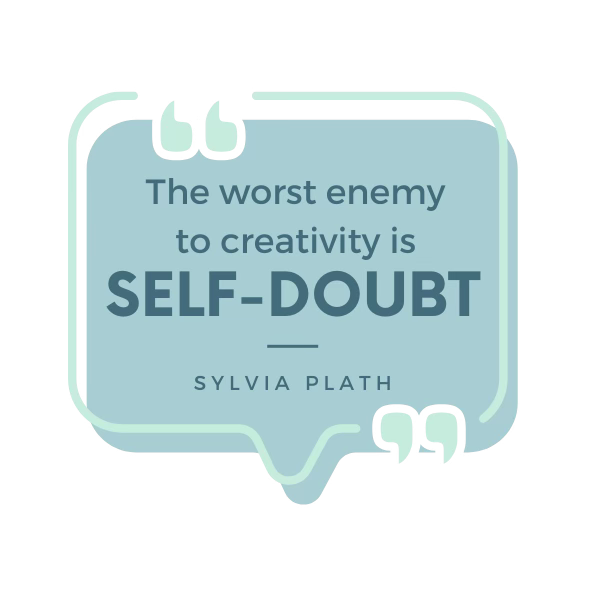
Why are writers so prone to self-doubt?
While I don’t have a definitive answer, here are some reasons I’ve experienced first-hand or observed over the years:
Creative process challenges: Writing often brings creative blocks and uncertainties about narrative arcs, character development, and other elements. These challenges can easily give rise to self-doubt.
Continuous learning curve: Writing is a craft we continue to hone throughout our lives. This constant learning can sometimes make us question our current abilities and progress.
Imposing standards: Many writers set high standards for themselves. If we feel we fall short of these expectations, it can lead to feelings of self-doubt.
Perfectionism: The desire for perfection can be a heavy burden. Any perceived imperfections in our work can trigger self-doubt, especially given the iterative nature of writing, where multiple drafts are the norm.
Vulnerability in expression: Writing often means sharing personal thoughts, emotions, and perspectives. This vulnerability can make us more susceptible to self-doubt, as we open ourselves up to being seen and judged.
Subjectivity of art: Writing, like all art, is subjective. Without fixed rules, the uncertainty about how our work will be received can create doubt.
External validation: The desire for positive feedback and recognition is natural, but when validation is lacking or negative, it can lead to waves of self-doubt.
Comparison with others: Comparing our work to that of established authors or our peers can easily make us feel inadequate. This constant comparison can undermine our confidence.
Fear of rejection: Sharing our work publicly or submitting it for publication exposes us to the possibility of rejection. This fear can deeply shake our confidence.
Isolation: Writing is often a solitary pursuit. The lack of immediate feedback or support can amplify feelings of self-doubt, making us question our path.
I’m sure there are many more reasons for self-doubt that I have yet to learn about. If you have any additional insights, please feel free to share them in the comments. Together, we can be better prepared to face and understand this common challenge.


A six-step self-care practice for overcoming self-doubt
Self-doubt can feel like an uninvited guest in our minds, quietly feeding us self-limiting thoughts that we've strangely grown accustomed to.
Its impact is very real, even if we don’t always notice it right away.
It’s curious, isn’t it? We wouldn’t accept constant negativity from someone else, yet we often give our inner doubter free rein.
But it doesn’t have to be this way.
Here is my “Six-Step Self-Care Practice” to help you gently overcome self-doubt and reclaim your confidence:
🌱Step #1: Acknowledge the negativity bias
Rest assured, we are not alone in our struggle with self-doubt. Renowned neuropsychologist Dr. Rick Hanson describes the human brain as having 'Velcro for negative experiences and Teflon for good ones.' Recognizing that we naturally tend to focus on the negative is the first step toward understanding and addressing it.
🌱Step #2: Cultivate self-awareness
Pay attention to any recurring patterns of self-doubt or negativity in your thoughts. When you notice them, try to identify and label them for what they are—perfectionism, comparison, fear—without over-identifying with them. Simply try to acknowledge these thoughts without attaching a story to them, avoiding the temptation to justify or explain them away.
🌱Step #3: Doubt your doubts
Approach your self-doubts with playful curiosity. When they arise, gently question their validity. Are these thoughts based on solid evidence, or are they simply assumptions? Be open to considering alternative, more positive perspectives on your abilities and achievements.
🌱Step #4: Practice positive self-talk
Make a conscious effort to take charge of your internal dialogue. When self-doubt creeps in, replace those thoughts with kind, affirming self-talk. Cultivate the habit of choosing constructive words that reinforce a more optimistic view of your skills and potential. Speak to yourself as you would to a dear friend, with encouragement and compassion.
🌱Step #5: Use positive affirmations
Transform your most encouraging self-talk phrases into affirmations that celebrate your abilities and worth as a writer. You can also look for quotes from inspiring writers that resonate with you and counteract your doubts. Make these empowering affirmations a part of your daily routine. Write them on sticky notes and place them where you’ll see them often—on your computer screen, desk, or bathroom mirror. Challenge yourself to read or write out your affirmation three times before you begin your writing.
🌱Step #6: Start writing!
Channel your newfound confidence into your writing endeavours. Focus on the joy and fulfillment that writing brings, creating positive associations with your creative process. As you embrace this positivity, let it guide and motivate you, becoming a driving force that propels you forward in your writing projects. Celebrate each word and each moment spent writing as a step toward something meaningful.

Ready to face and conquer your self-doubt?
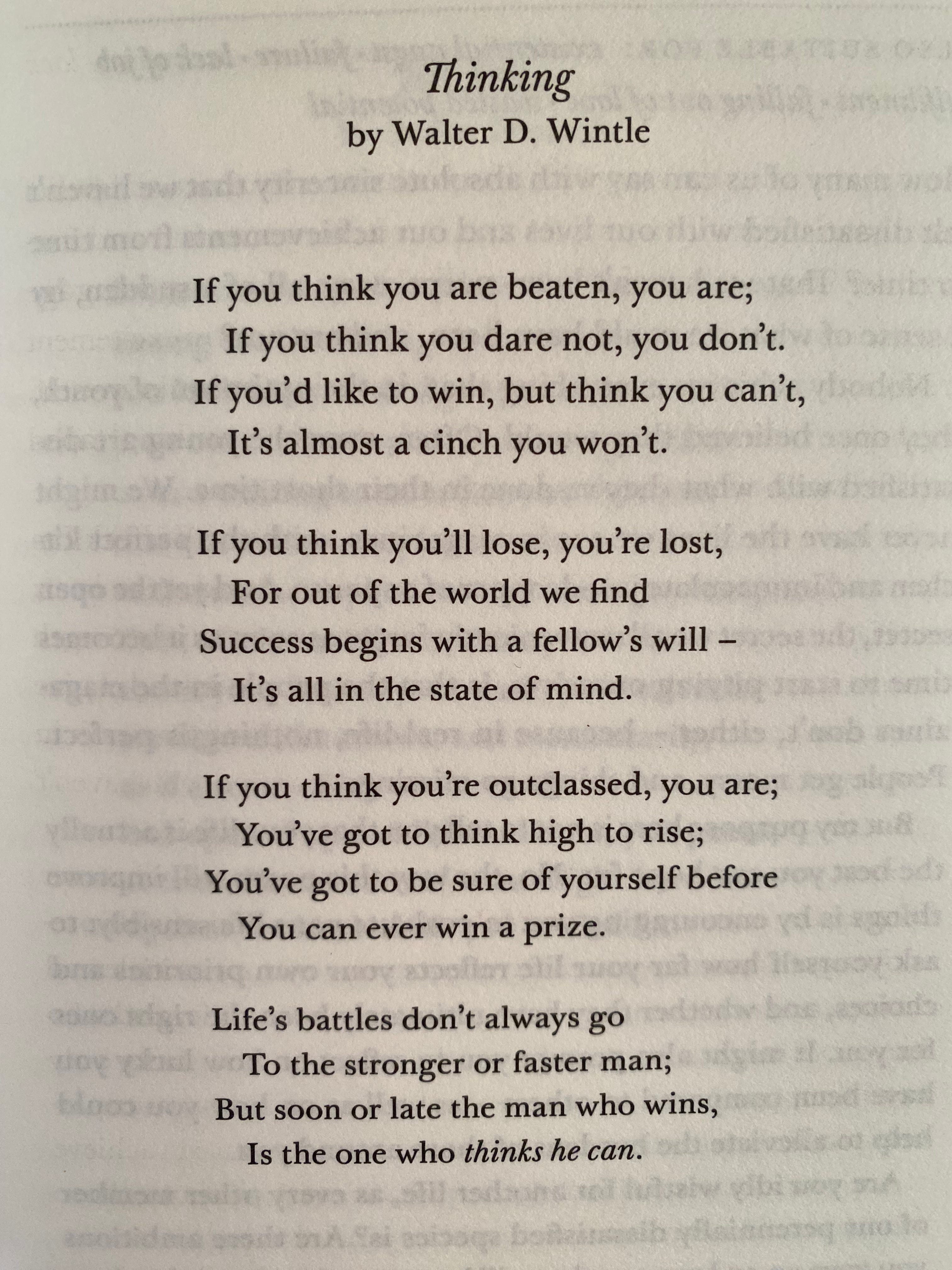
As I begin to wrap up this post, I’d like to share with you a wonderfully uplifting poem that serves as a perfect antidote to self-doubt:
Invitation
For today’s invitation…
Feel free to share your favourite positive affirmation in the comments below. I've already shared mine!
Until next time,
Helen xx
Helen, I loved this post about self doubt. It resonated with me. I’ve done and do all of the symptoms you mention, even though I know they are all in my mind.
I’m sure your post will be helpful to not only authors but any body who creates anything… artists, musicians, etc. I’ll be sharing it with many people I know who go through this constant battle as I do.
So thank you. 🙏
What a great list. Especially love #3!